When Nature Calls…

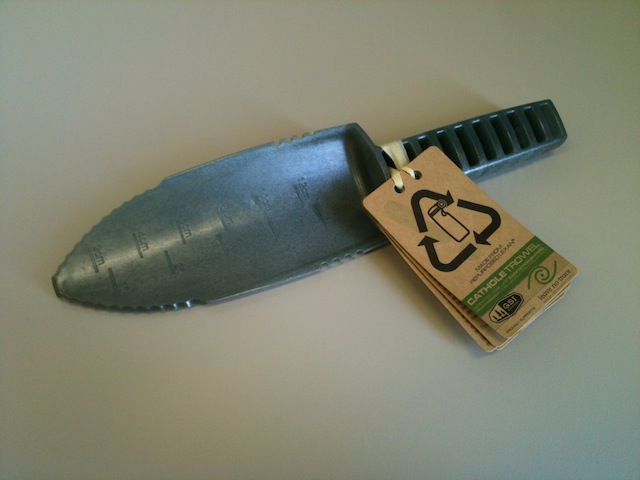
Made from repurposed Lexan®, this serrated, sure-grip sanitation shovel is a great piece of kit for the proper disposal of human waste whilst in the backcountry. The serrated edges also make this trowel handy for general light duty digging tasks in and around your campsite. The Cathole Trowel from GSI is lightweight, quite a bit more durable than other camp trowels, and has Leave No Trace™ Usage Guidelines molded into the back.

Leave No Trace – Centre for Outdoor Ethics (Attached to each GSI Cathole Trowel)

“Improper disposal of human waste profoundly impacts the once pristine natural environments which we all cherish. From the simple unpleasantness of encountering someone else’s waste to the potential contamination of water sources, waste disposal affects everyone who ventures beyond the confines of the urbanized landscape. A cathole is an excellent way to dispose of human waste in the backcountry.”

Location:

  • Select an inconspicuous site at least 200ft. (approx. 70 adult paces) from water sources, trails and campsites.
  • The best sites have deep organic soil with dark, rich coloration and maximum  exposure to sunlight to aid decomposition.
  • Avoid areas of water runoff; seasonal or otherwise.
  • When camping for an extended period at one site or with a large group, be sure to widely disperse cathole locations.

Note: When camping in river canyons, solid human waste must be packed back out.

Excavation:

  • In most environments, dig a hole 6″ to 8″ deep and 4″ to 6″ in diameter.
  • In arid or desert conditions, dig a hole 4″ to 6″ deep and 4″ to 6″ in diameter.

Toilet Paper:

  • Use only plain, non-perfumed toilet paper in sparing amounts.
  • In arid conditions, toilet paper should be sealed in plastic bags and packed back out.
  • Whenever possible, substitute stones, leaves, snow or other natural materials for toilet paper.

Tampons:

  • Tampons must be packed back out in sealed plastic bags as they do not biodegrade readily.

Burial:

  • Always fill cathole with original soil and disguise with native materials (rocks, brush, etc…)
  • When burying toilet paper, be sure to bury it at bottom of catholes and cover completely with soil.

Urination:

  • When urinating, try to select inorganic surfaces like rocks or gravel which will serve to disperse urine and protect vegetation and soil.

Note: In some Western River Corridors, it is best to urinate directly in the river to protect the vulnerable shoreline. Please refer to local land management recommendations.

www.LNT.org

From the GSI website:

Made from repurposed GSI Outdoors Lexan products Serrated edges make for easy digging, even in the most stubborn soil. Leave No Trace Center for Outdoor Ethics Usage Guidelines molded into back of trowel.”

MAJOR DIMENSION

10.2″

WEIGHT

3.1 oz.

DIMENSIONS

10.30″ x 2.60″ x 1.00″

MATERIAL

Recycled Polycarbonate

www.gsioutdoors.com

Cost: Around CDN $4.25

Survival Stories

Spend a day immersing yourself in survival situations through a compilation of some of the greatest tales of survival ever. Live through harrowing true life adventures from the safety of your favourite reading spot and gain a new appreciation for those who’ve survived some of the most extraordinary survival ordeals ever recorded.

The Best Survival Stories Ever Told recounts stories of ordinary mortals who achieved extraordinary things. Spanning the ice-locked Poles and the endless deserts of Arabia to the storm-tossed South Atlantic, the rainforests of the Amazon, and sheer peaks of the Himalayas, it charts the dangerous relationship between men and nature.”

Jon E. Lewis is a historian and writer, whose books on history and military history are sold worldwide. Jon holds graduate and postgraduate degrees in history, and his work has appeared in New Statesman, the Independent, Time Out, and the Guardian. He is also editor of SAS: The Elite Special Forces in their Own Words.

ISBN: 978-1-61608-455-4

Cost: Around CDN $13


Shelter and Warmth

In a survival situation, shelter from the elements is critically important. Although water is a high priority, depending on the circumstances, a person can easily succumb to the effects of hyperthermia or hypothermia much faster than dying of dehydration. To put things into context, a person may survive for 2 – 3 days without water; however, in extreme cold or heat, a person may not last more than a few hours.

When it comes to shelter and the idea of warmth, it is important to recognize that it isn’t necessarily the shelter itself that generates warmth. The primary function of a shelter, especially in a survival situation, is to provide protection from the elements (wind, rain, snow, etc.) and to a certain extent, predators. We seek protection from the elements because they endanger our ability to maintain our core body temperature.

For example:

The source of heat for a snow-based shelter could come from a candle, small fire, your body heat (by default), a lantern, or a combination of several different sources. While snow-based shelters provide excellent insulation, you should ask yourself – what is the source of heat it’s insulating for you?

Think about the shelters we move in and out of on a daily basis. Our homes, offices, vehicles etc… It is not the structure itself that generates warmth per se, but rather a furnace, fireplace, heater etc… In other words, the shelter’s warmth is generated by a heat source. In a survival situation, give some thought to the heat source of your shelter as it may ultimately determine the type of shelter you construct.

Remember – In a survival situation, shelter and protection from the elements is critical. Don’t forget that your clothing is your primary shelter and clothing should therefore be well thought out.

Shelters are effectively micro-climates which allow us not only to survive, but to live and settle in environments that would otherwise be quite inhospitable. Proper clothing is what allows us to leave our shelters (homes, buildings, vehicles etc.) and move around. Therefore it is essential to think of our clothing as a shelter… After all, our clothing does in fact protect us from the sun, wind, rain, snow etc…


Practice Safe Survival

In most compact/pocket size survival kits, it is rare to find a proper means to hold and carry water. If you wish to keep your kit small, a non-lubricated condom can be used as an improvised container. Place the unrolled condom inside a sock (to protect the condom) and fill with water – it will hold roughly 1 litre of water.

Tip:

To fill a condom with water, try to find a large source of water with a certain degree of water pressure.

Flat Water

If you’re looking for a low profile, lightweight option to carry your water, consider the Platypus water “bottle.”

A great piece of kit for the minimalist.

Cost: Around CDN $13

www.cascadedesigns.com

From the Platypus website:

Description:

There’s not a hard bottle out there that’s cleaner, greener, and more flexible than a Platypus SoftBottle. Each one comes with our Clean-Taste Guarantee and it’s made with zero BPA. The SoftBottle is green, too, because it’s ultra-reusable and lightweight, it uses less energy and materials.

Finally, your SoftBottle defines flexible. It fits in a drink holder, a round pocket, a flat pocket, or any hand. When empty, it rolls up and fits anywhere you want it to fit. Plus, it weighs 80% less than hard hydration bottles.

Available with Closure Cap or our new dual-valve HyperFlow Cap.

Specifications:

.5L 1L
Color Gray, Gray, Blueberry, Blueberry, Raspberry, Raspberry Gray, Gray, Tangerine, Tangerine, Grape, Grape
Capacity 17 fl. oz / .5 liters 34 fl. oz / 1 liters
Weight .8 oz / 22 g .9 oz / 24 g
Width 5 in / 12 cm 6 in / 15 cm
Length 12 in / 29 cm 13 in / 33 cm
Film Nylon / Polyethylene Nylon / Polyethylene
Spout material Polyethylene Polyethylene
Cap material Polypropylene Polypropylene
Bite valve material
Country of Origin Made in USA Made in USA

ARC’TERYX Rampart Pants

The Arc’Teryx Rampart pants are super lightweight and provide phenomenal freedom of movement. As a result, these pants are extremely comfortable. In addition to being super durable, these pants are also breathable, making them a great choice for hot weather use.


Along with the two heavy duty snap buttons, I especially like the way the pockets are cut, particularly the side cargo pockets. The angles at which the cargo pockets are slashed is very ergonomic.

The only downside is their inability to hang around campfires as the material cannot handle sparks.

From the Arc’Teryx website:

Lightweight, breathable and durable, the Ramparts are urban inspired technical pants for climbing and hiking. Designed for unrestricted mobility they feature articulated knees and seat, and a gusseted crotch. Cargo pockets lie flat when empty and expand as needed. Gender specific patterning.

Technical Features

  • Breathable
  • Lightweight
  • Durable
  • Quick-drying

Patterning

  • Articulated knees and seat
  • Gusseted crotch

Pocket Configuration

  • Two hand pockets
  • Two pleated cargo pockets with flaps
  • Two rear pockets with flaps
Zippers & Fly Configuration

  • Front fly with snap closure

Waist & Belt Configuration

  • Belt loops

Inseam Length (cm)

  • 80 cm inseam
TerraTex™—Nylon/Spandex blend
Care:
  • Machine wash in cold water.
  • Wash dark colours separately.
  • Tumble dry on low heat.
  • Iron on low heat.
  • Do not use fabric softener.
Cost: Around CDN $100

www.arcteryx.com

Outdoor Research Zip Sacks

Ultra-durable, waterproof and fully featured.

The versatility and functionality of these zip sacks is in their simplicity. They can be used to create your own survival kit, First Aid kit, Toiletry Bag…the list is endless.

From the Outdoor Research website:

Made of a tough Antron nylon with a durable, waterproof Hydroseal® coating, this dry sack provides reliable waterproof performance. Taped seams and a roll-top closure ensure complete protection, and the external daisy chain and webbing bottom handle simplify carrying.

Avg. Weight (oz./g): 2.4 / 68 5L

  • Hydroseal® coated nylon is waterproof and durable
  • Waterproof taped seams; roll-top waterproof closure
  • Durable buckle secures roll top
  • External daisy chain
  • Webbing bottom handle

Cost: Around CDN $15 and up, depending on the size.

www.outdoorresearch.com

What Came First – the Spoon or Fork?

What came first – the chicken or the egg? Did the spoon come first or did the fork? While the first question may never be answered, who cares which utensil came first when you can buy a Spork! (Spoon + Fork =  Spork).

Whether in your lunch bag or part of your camping gear, a Spork is functional and fun to use.

In this article, two well known producers of Sporks face off in a duel of hi-tech metal vs. plastic.

In one corner, we have the Japanese company SnowPeak whose material of choice for cutlery and other backcountry cooking products is titanium. Super light, super strong, and hypoallergenic, titanium is an excellent choice for those looking for a Spork that will “last forever.”

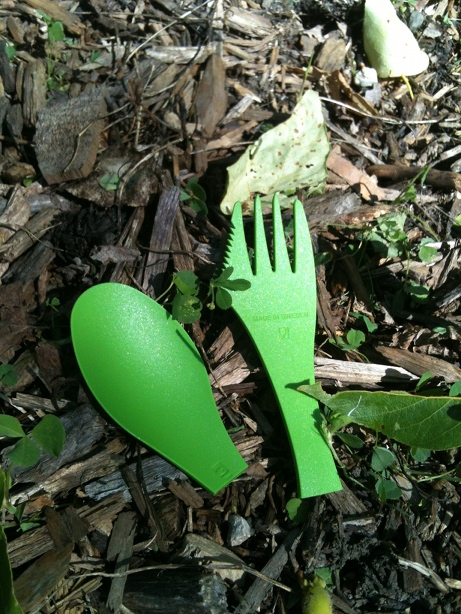
In the other corner, we have the Swedish based Light My Fire (LMF) who make lightweight ultra funky outdoor & urban food gear out of super durable plastics – also likely to “last forever.”

After testing these two Sporks on a variety of foods…here are my findings:

Weight: The SnowPeak is slightly heavier but both are incredibly lightweight.

Length: Basically the same.

Colour: The SnowPeak has a matt finish which reduces glare while LMF’s Spork comes in a variety of funky colours.

Design: The SnowPeak is clean and straight forward while Light My Fire utilizes both ends for a unique look. In addition, LMF’s Spork’s fork has a serrated outer prong edge.

Durability: While both are dishwasher safe and very robust, the LMF may have a slight advantage in terms of resisting bending and bouncing back to its original shape (within reason). However, the SnowPeak can resist direct heat from flames, campfires etc.

LMF Spork

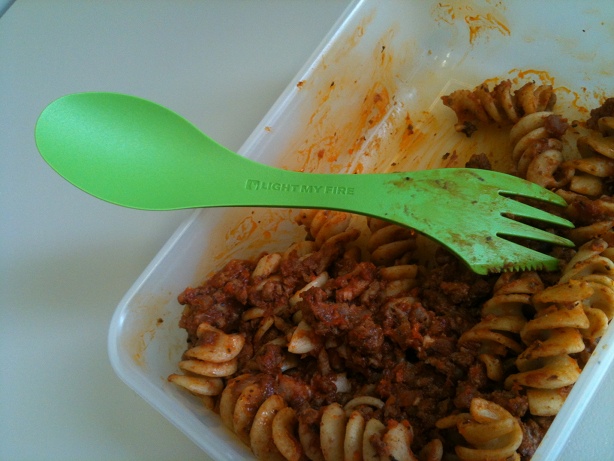
Ergonomics: Although both hold a variety of foods well, the SnowPeak is much easier to grasp and use. The LMF on the other hand is slightly awkward due to the curvature of the entire utensil…it’s just not as comfortable.

LMF Spork food

In my opinion – the SnowPeak comes first.

SnowPeak – Cost: Around CDN $10

LMF – Cost: Around CDN $3